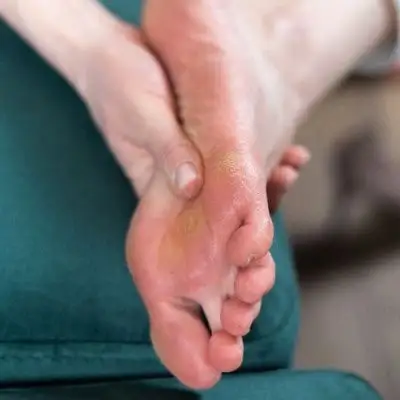
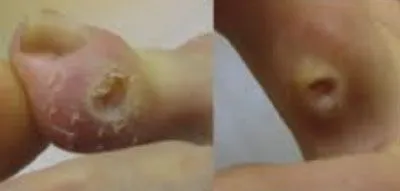
Typically locate on the 4th or 5th toe and it is caused by friction, pressure, and moisture. They are more prominent in those that smoke.
Treatment: Removal of the corn, Reduction in moisture, Smoking cessation.
Lister’s Corn
It presents on the lateral aspect of the fifth toe. It is caused by pressure and commonly mistaken for an extra part of the toe nail. It also presents due to the internally rotated 5th toe.
Treatment: Offloading of the toe, surgical removal, flexor tenotomy
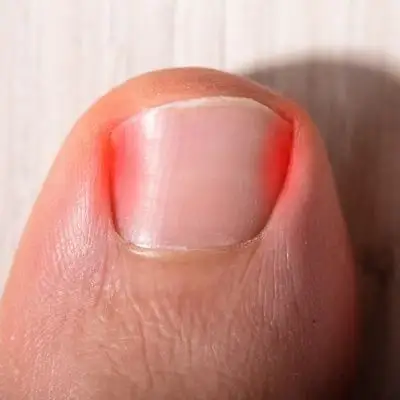
Ingrown Toenails
It affect the sides of the toenail. It is caused by nail shape, improper toenail cutting, sweaty feet
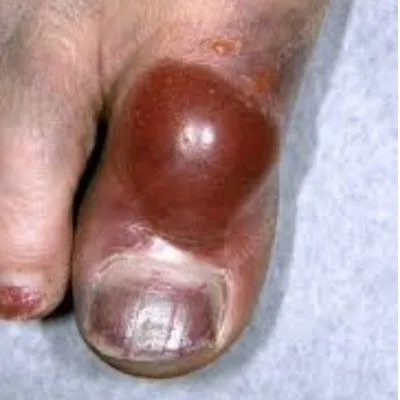
Gout is caused by the crystallization of uric acid within the joint. Urate crystals are deposited predominantly in the superficial portions of the articular cartilage. The deposits cause joint inflammation.
The following increase the risk of someone developing gout: A diet rich in meat and seafood and drinking soda and alcohol consumption especially beer; Obesity; High blood pressure, diabetes, metabolic syndrome, heart and kidney diseases; Thiazide diuretics; Recent surgery or trauma.
Treatment: NSAIDs, colchicine, allopurinol, etc.
Hammertoes
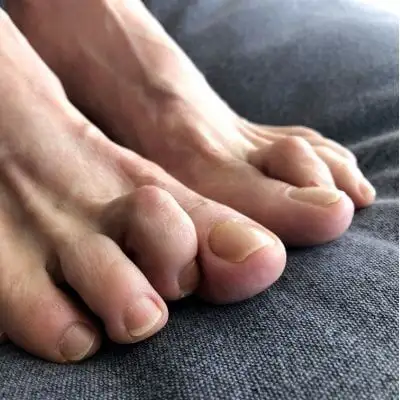
Digital deformities are caused by biomechanical abnormalities. Inflammatory conditions like rheumatoid arthritis, tight fitting shoes, diabetes, high arch feet, neurological conditions like Charcot Marie tooth, Cerebral palsy, Stroke can cause biomechanical abnormality.
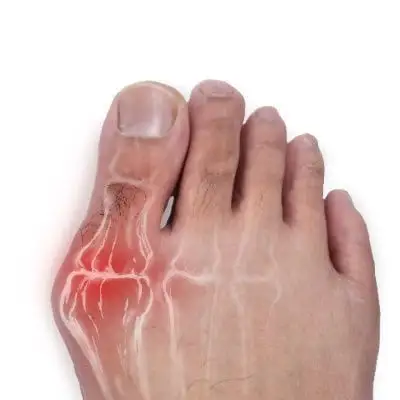
A bunion is a bony protruberance at the side of the ball of big toe. It causes the joint to press against the metatarsal bones. Bunions become more painful over time as they start to press against the inside of your shoes and inflammation increases. Flatfeet, hypermobile first ray, poor shoe gears, congenital deformity, neuromuscular disorders, joint conditions increase the risk of developing bunion deformity.
It is a reduction of the range of motion of the great toe. Normal dorsiflexion range of the first metatarsophalangeal joint should be 65 to 75 degrees in order to allow for a normal gait. It is caused by non-supportive footwear, flat feet, or high arch feet, and trauma.
Treatment: Turf toe taping, Rocker sole shoes, Carbon fiber orthotic inserts, surgical fusion, Joint replacement.
Metatarsalgia
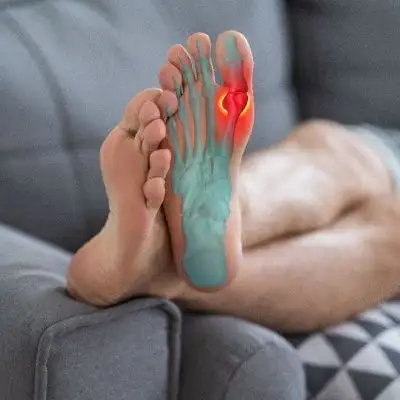
It is chronic problems affecting the balls of the feet it may involve the following pathologies:
Morton’s Neuroma
Neuroma is a thickening of the nerve sheath that supplies sensation to the area between the toes. It is the result of a combination of a compression trauma and ischemic entrapment neuropathy of the common plantar digital nerve. Patient have burning, tingling, numbness, and pain in the region of the forefoot. The irritation of the nerve can be worse with tight fitting shoegear, hypermobile joints, hammer toes, flat foot, high arch foot.
The plantar plate is a fibrocartilaginous anatomical structure that provides stability to MPJ. Plantar plate pathology occurs with increased pressure or strain. When the plantar plate stretched or torn, the toe becomes unstable.
Treatment: digital taping, Budin loop splints, metatarsal pads, custom orthotics.
Freiberg infarction
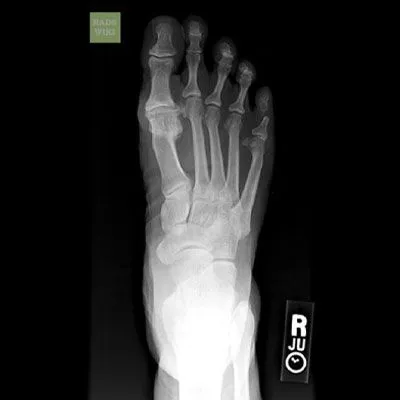
Freiberg infarction is avascular necrosis of the second metatarsal. Avascular necrosis is the death of bone tissue as a result of disruption to the blood supply in the bone. It is commonly seen in the navicular bone, talus, and the second metatarsal. There can be pain, swelling, redness, or warmth on the top of the foot.
The sesamoid bones are underneath the great toe. They lie within the flexor hallucis brevis and of function is increasing the leverage of the muscles that flex the toe. Abnormal force applied to the sesamoid, poor shoe gears, high arch feet, or flat feet can cause sesamoiditis.